“The blackout in Spain has nothing to do with interconnections, but with the fact that no system, at least with current technology, can sustain such dependence on renewable energy. Stability in the energy mix is needed because otherwise, shocks that are too large occur. But it’s not just about interconnections. Grids are needed.”
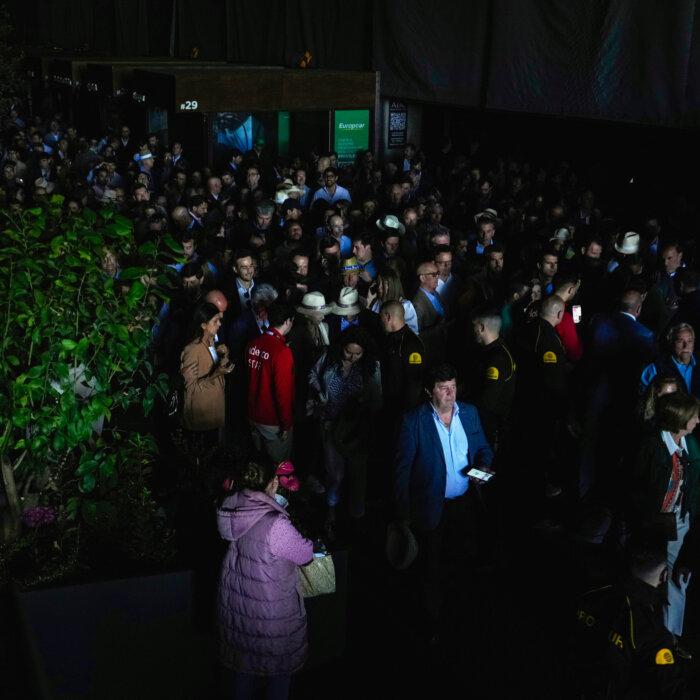

However, a day later, REE President Beatriz Corredor Cadena, a former Socialist minister, rejected any link between solar dependence and the blackout, saying that renewables today operate “as reliably as conventional generators.”
Spanish Prime Minister Pedro Sánchez also denied an excessive reliance on renewable energy.
On Jan. 12, Spain’s High Court said it closed an investigation into the blackout after several technical reports found no evidence of a cyberattack.
Since adopting its Climate Change and Energy Transition Law in May 2021, Spain has committed to achieving climate neutrality by 2050, with a complete phase-out of nuclear energy by 2035.
The first reactor is slated to close in 2027. The vision is a grid powered almost exclusively by wind and solar.
“The Iberian incident is a lesson in trigger events and systemic risk, both of which are exaggerated by renewables,” Andy Mayer, COO and energy analyst at free-market think tank Institute of Economic Affairs, told The Epoch Times by email at the time.
In large power plants, steel turbines that weigh hundreds of metric tons and span several meters spin at 3,000 rpm in a 50 Hz system to stabilize frequency by resisting sudden speed changes. Inertia is the stored kinetic energy of the system’s giant spinning metal turbines.
Oil- and gas-fired stations and nuclear power plants have traditionally enabled the decades-old grid to keep a consistent frequency. However, the rapid increase in renewables and their variable output can destabilize the rest of the grid.
Mayer said that renewables are more difficult to connect to the grid and more distributed, which requires more equipment and creates more points of failure.
He said that such sources lack inertia, which means that when they fail, “they fail fast and hard.”
“A sudden loss of power in turn can push the rest of the grid out of balance, triggering relays designed to stop ‘oscillation events’ from damaging equipment,” Mayer said.
“Consequently, there is higher risk of a trigger event, and a higher risk of a systemic cascade in a renewables-rich power grid. That’s what just happened in Spain and Portugal.”


You need to be a member of Citizens' Task Force on Wind Power - Maine to add comments!
Join Citizens' Task Force on Wind Power - Maine