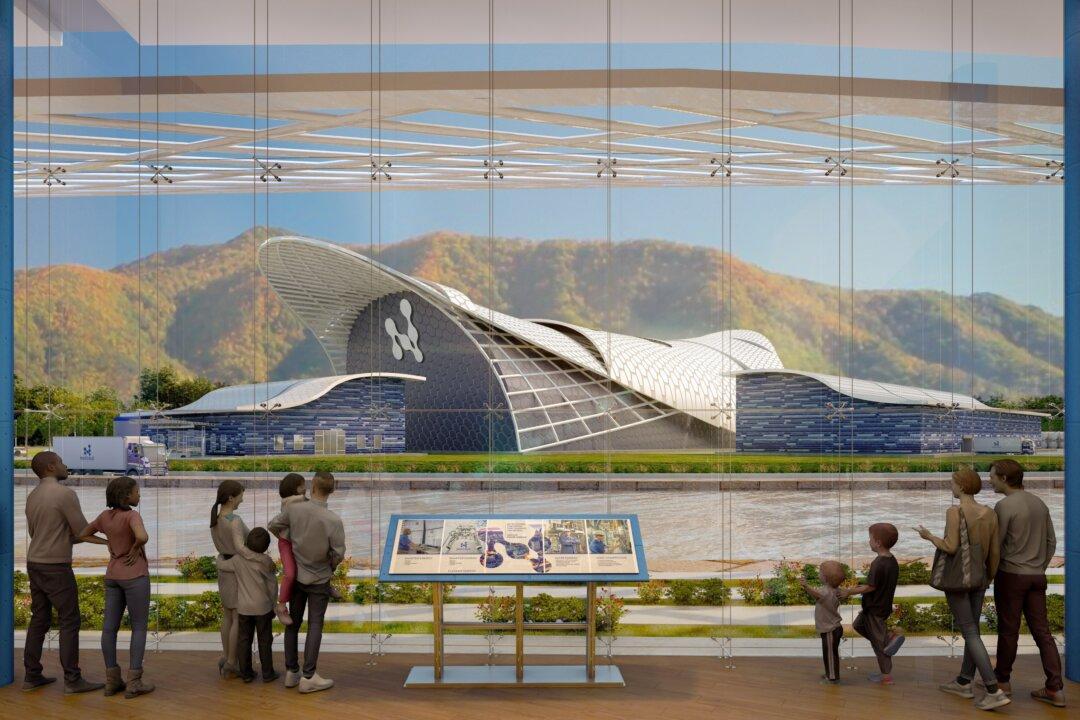

As Arizona seeks to keep up with rising energy demand, lawmakers are championing a bill that would fast-track the deployment of small modular nuclear reactors to boost capacity.
“Advanced nuclear reactors are coming, and we need to be prepared,” said Majority Leader Michael Carbone, the bill’s sponsor, in a statement. “We need these projects to keep up with China and compete on national security.
“Educating the public remains the No. 1 issue, but I believe when members of the public see the facts, they will understand the substantial benefits these projects can bring,” he continued.
The bill now moves to the full House for consideration.
Carbone said small modular reactors provide safe, clean, and reliable power, along with high-paying jobs and chances for economic growth, especially in rural areas.

“HB 2795 ensures that when federal safety standards are met, and the public has had its say, local zoning cannot be used to block these critical projects that can secure our future energy supply,” he said.
Carbone said that the bill is designed to accelerate the deployment of next-generation nuclear reactors in Arizona while still giving the public a voice and upholding safety standards.
HB 2795 limits the ability to ban small modular reactors, provided federal safety rules, permits, and public notice requirements are met.
The bill opens the door to new nuclear power projects in rural Arizona and ensures local communities can share their views through federal public comment opportunities, Carbone said.

Carbone said this measure aligns with the House Republican Majority Plan to boost the economy, support rural areas, and ensure Arizona families and businesses have reliable power.
Is Smaller Safer?
Carbone said that small modular reactors are considered safer than traditional designs because they include features that make them “meltdown-proof and walk-away safe.”He added that the bill ensures that the public zoning process cannot be used to block these new technologies.
The International Atomic Energy Agency says these smaller systems offer several advantages.
They are more compact than traditional nuclear reactors, can be assembled in factories thanks to their modular design, and use fissionable material to produce energy.
These systems can also improve energy access in rural areas and help lower the costs of connecting to the power grid.
While no small nuclear reactors are yet powering businesses in the United States, a wave of innovative designs is steadily taking shape.
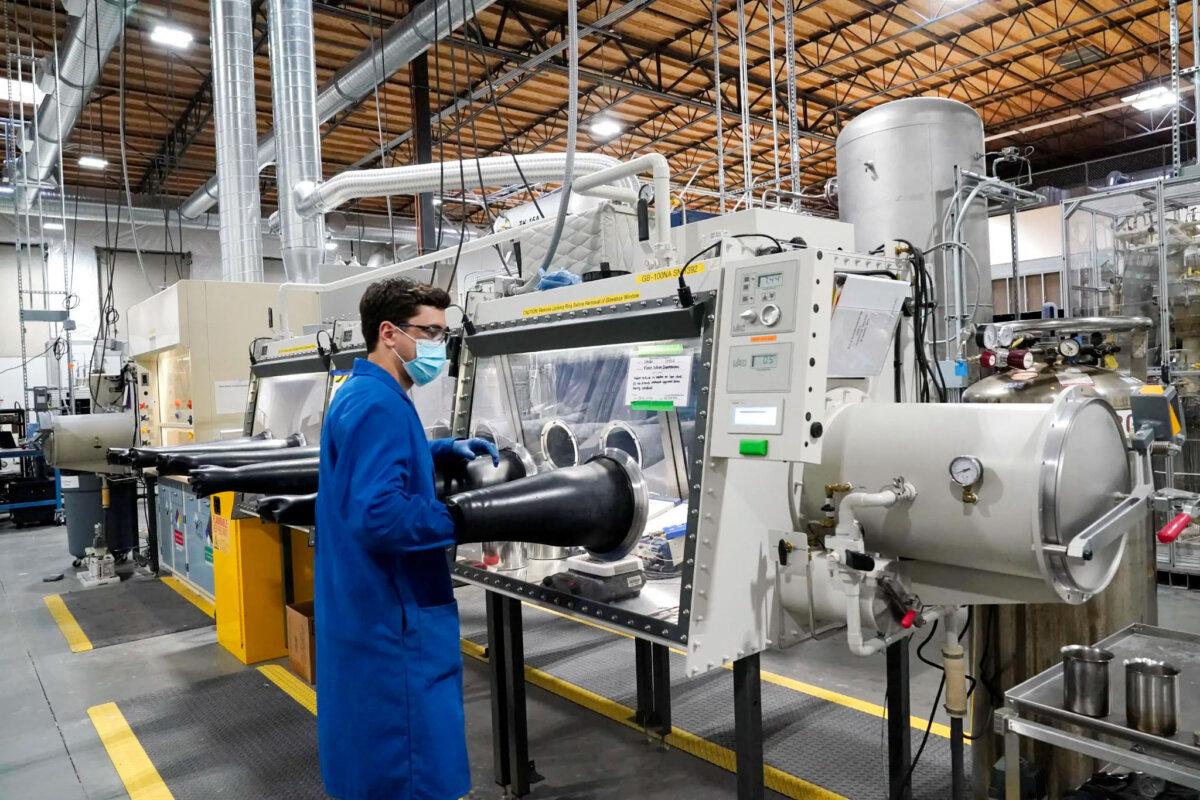
The Department of Energy says advanced small modular reactors are an important part of safe, clean, and affordable energy solutions.
These reactors come in different sizes, use various technologies, and offer several options for use.
“These advanced reactors, envisioned to vary in size from 10 megawatts, can be used for power generation, process heat, desalination, or other industrial uses,” according to the Department of Energy’s website.
“The department has long recognized the transformational value that advanced [small modular reactors] can provide to the nation’s economic energy security and environmental outlook.”
An executive order signed by President Donald Trump on May 23, 2025, supports the rapid development, deployment, and use of new nuclear technologies to achieve national security goals.
These include protecting and operating critical buildings, military sites, and other key resources.
The directive allows private companies to invest in and help build these technologies while recognizing their importance to national defense.
Smaller By Design
NANO Nuclear Energy is a New York company led by CEO James Walker. The company designs advanced and portable reactors, such as the Zeus microreactor.
Walker told The Epoch Times that several factors are pushing the development of this new technology.
These include the need for constant zero-carbon power to support other renewable energy sources.
Other reasons include energy security, a stronger power grid, and access to remote or island locations.
“Projected power demand from the tech industry alone looks like it will massively exceed the national grid’s ability to output the necessary power to fuel this industrial energy demand,” Walker said.
That’s why companies like Meta, Google, and Microsoft are now supporting nuclear solutions, he said.
Many designs are still in early stages, including pre-application discussions, testing, and the development of new supply chains, Walker said.
In the near future, the main goals are to conduct demonstrations and secure early construction permits.
Wider commercial use is expected later this decade, and into the 2030s, he said.
Small reactors, however, are not automatically cheaper than large reactors on a dollar-per-kilowatt basis, Walker added.
Their economic case usually rests on several advantages: smaller project size, shorter construction schedules, and learning-by-doing through factory repetition and multi-unit deployments.
These factors can reduce financing risk and, in turn, lower costs, Walker said.
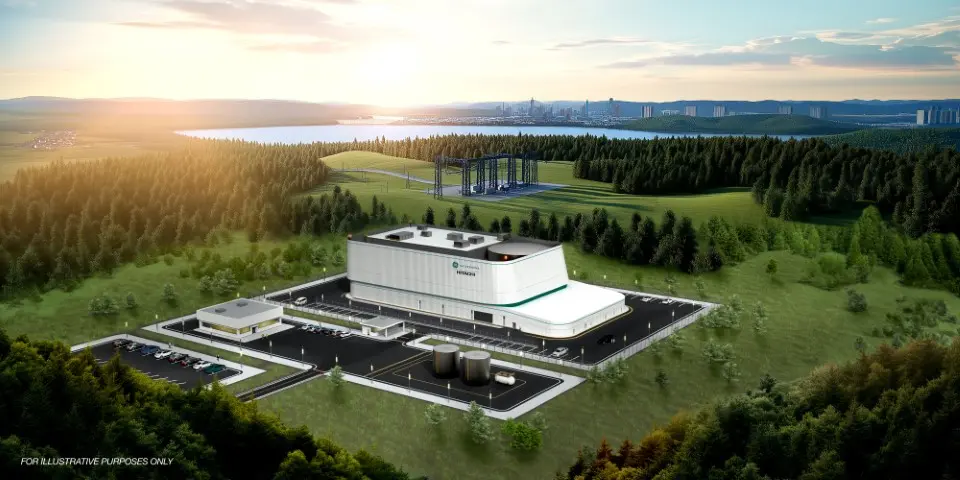
He said the main advantages often mentioned for microreactors and small modular reactors are their ability to scale by adding more units as demand increases.
Placing them on smaller grids is more flexible in remote areas, producing reliable power with very low operating emissions.
Walker said that fuel choices depend on the reactor’s design. Many advanced units plan to use uranium enriched to 10 percent–20 percent, which makes the cores more compact and allows them to run longer between refuelings.
“Overall, microreactors can be very safe when designed, licensed, built, and operated under robust nuclear standards—but how safe is ultimately demonstrated through licensing, testing/qualification, especially fuel, and operational programs,” Walker said.
Walker foresees greater focus on standardization, factory production, and multi-unit sites to improve learning and boost investor confidence.
A Question of Safety
Critics question the safety of the new scaled-down reactors because they have no established track record.“They are not cleaner and cheaper [and they] have not been proven in the real world, where cost overruns have canceled projects,” observed Sandy Bahr, director of the Sierra Club, Grand Canyon Chapter in Arizona.

Bahr told The Epoch Times that although billions are spent on experimental technology, proven energy solutions that are available, affordable, and effective today are often overlooked.
“Nuclear energy has always been plagued by high costs that require massive government subsidies. [Small modular reactors] are no exception,” Bahr said.
Meanwhile, three Arizona power companies—Salt River Power, Tucson Electric Power, and Arizona Public Service—have begun a joint effort to explore next-generation nuclear reactors to meet growing energy demand.
The team will continue to evaluate new nuclear technologies and will soon begin assessing potential sites across Arizona, SRP Senior Manager of Public and Media Relations Jennifer Schuricht told The Epoch Tim


You need to be a member of Citizens' Task Force on Wind Power - Maine to add comments!
Join Citizens' Task Force on Wind Power - Maine